In 2016, we went camping in Michigan's Upper Peninsula. If you've ever been, you know the deal — outside the small towns, it's just forest. Miles of pine and birch, beautiful and completely cut off. Drive ten minutes past the town line and your phone becomes an expensive paperweight.
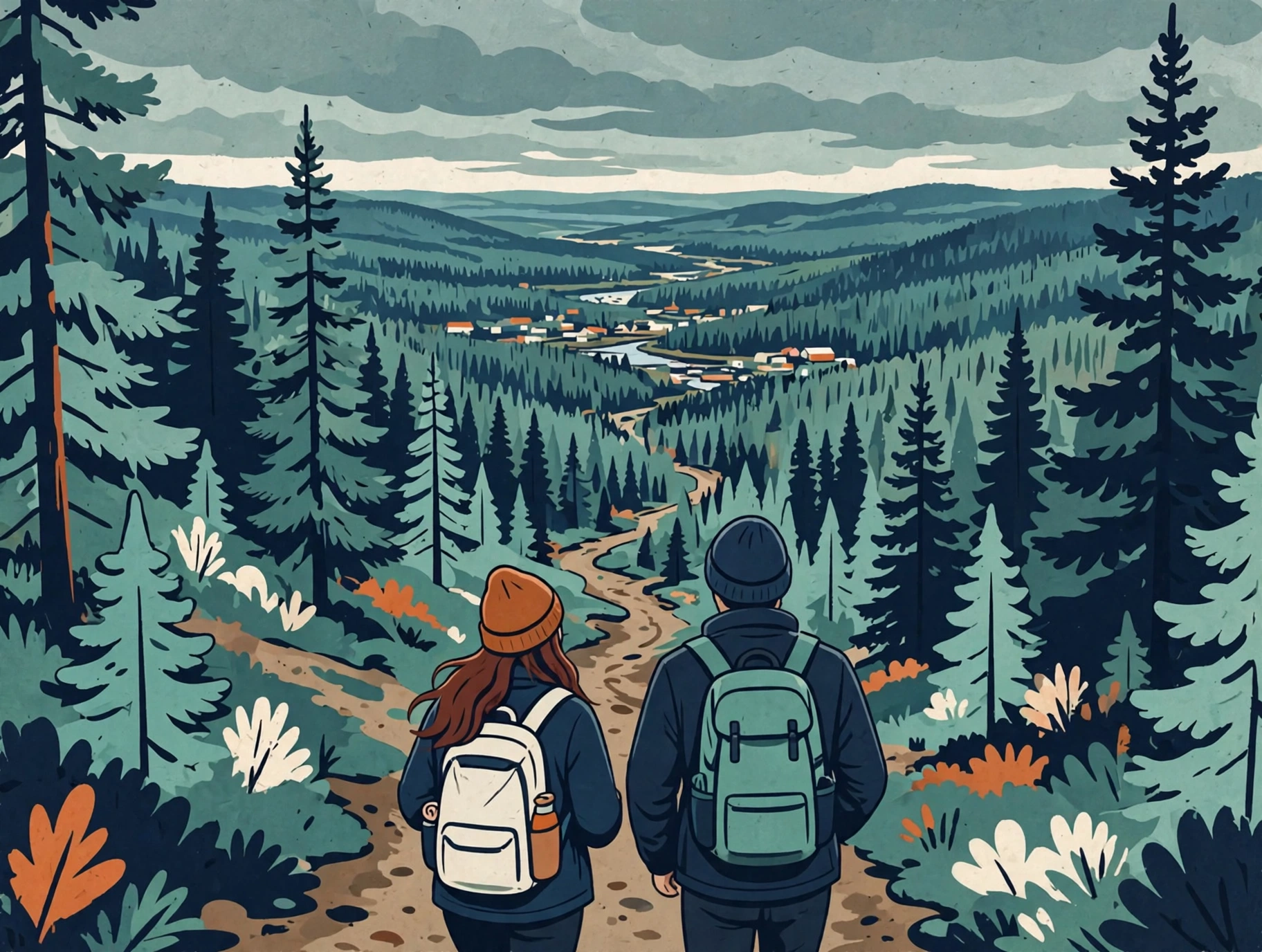
We were hiking a trail when a dog came trotting up to us out of the trees. No owner in sight. He was friendly, tail going, clearly someone's companion who had wandered too far from camp. His collar had a tag with a phone number. Problem solved, we thought.
Except there was no signal. Not one bar. We held our phones to the sky, walked to higher ground, tried every trick you try — nothing. The Upper Peninsula doesn't care about your carrier's coverage map.
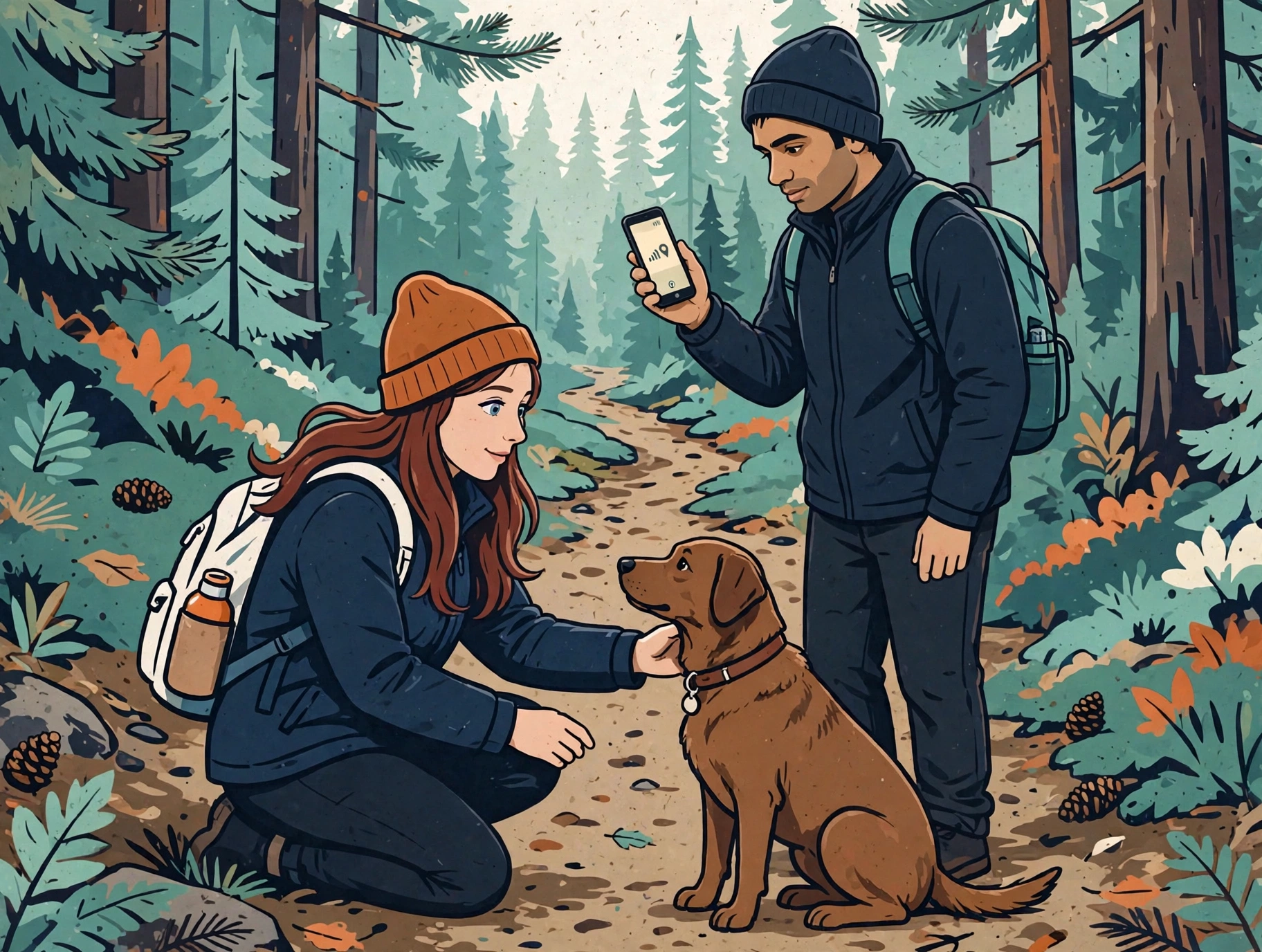
So we did what you do. We loaded the dog into the car, drove back toward town until the bars came back, and started calling. No answer. We waited. Called again. Waited more. Hours slid by. When we finally reached the owners, the relief in their voices was something I won't forget — they'd been out searching, imagining the worst.
Then came the drive. More hours on the road to get the dog back to them. The reunion was pure joy — the kind that makes you forget the inconvenience for a moment. The dog practically knocked his owner over. Everybody laughed. Happy ending.
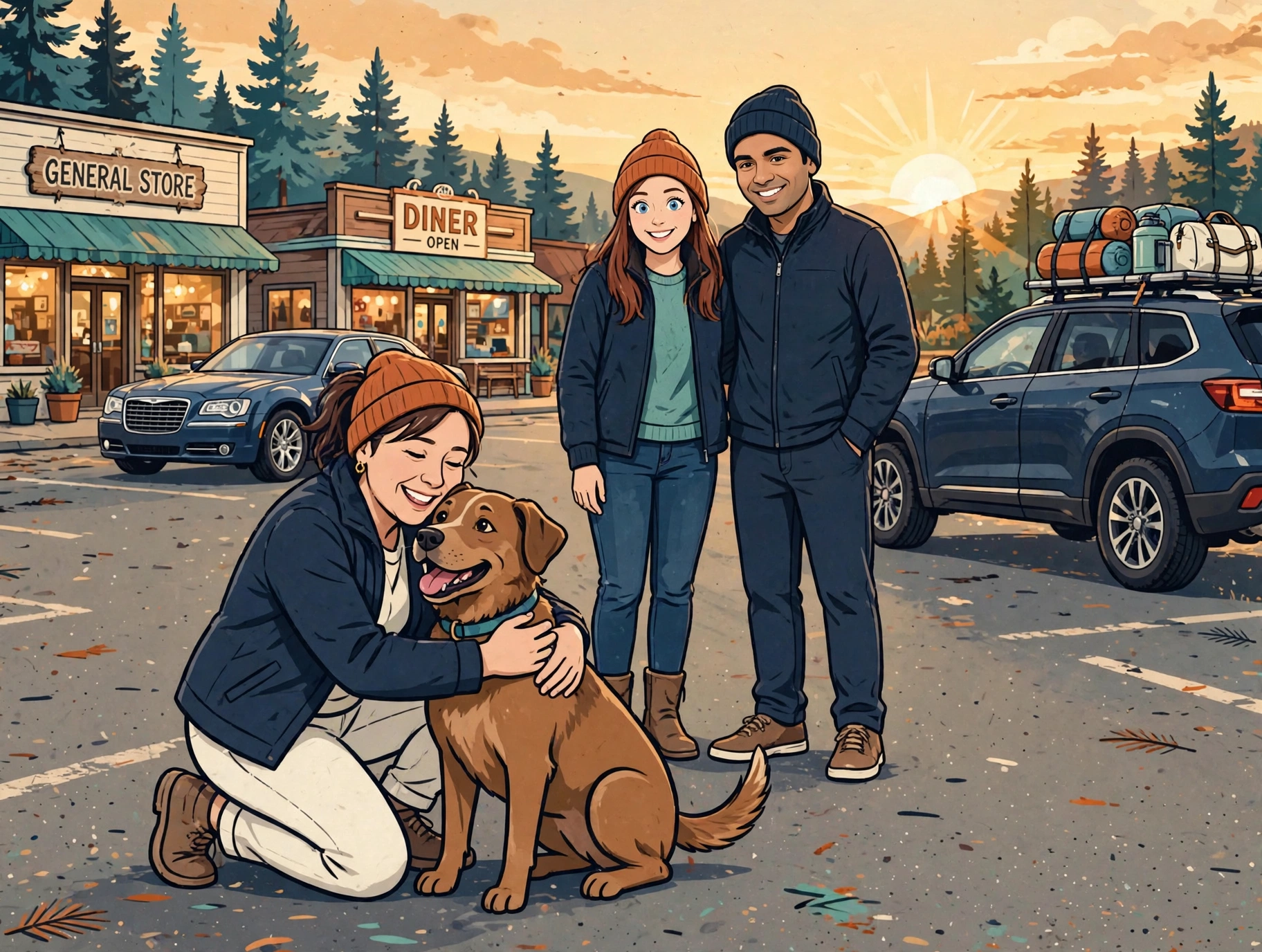
But here's what stuck with me. Those owners had been through an emotional wringer — hours of not knowing where their dog was, or if they'd ever see him again. And we'd lost most of a day to driving back and forth and sitting around waiting for a callback.
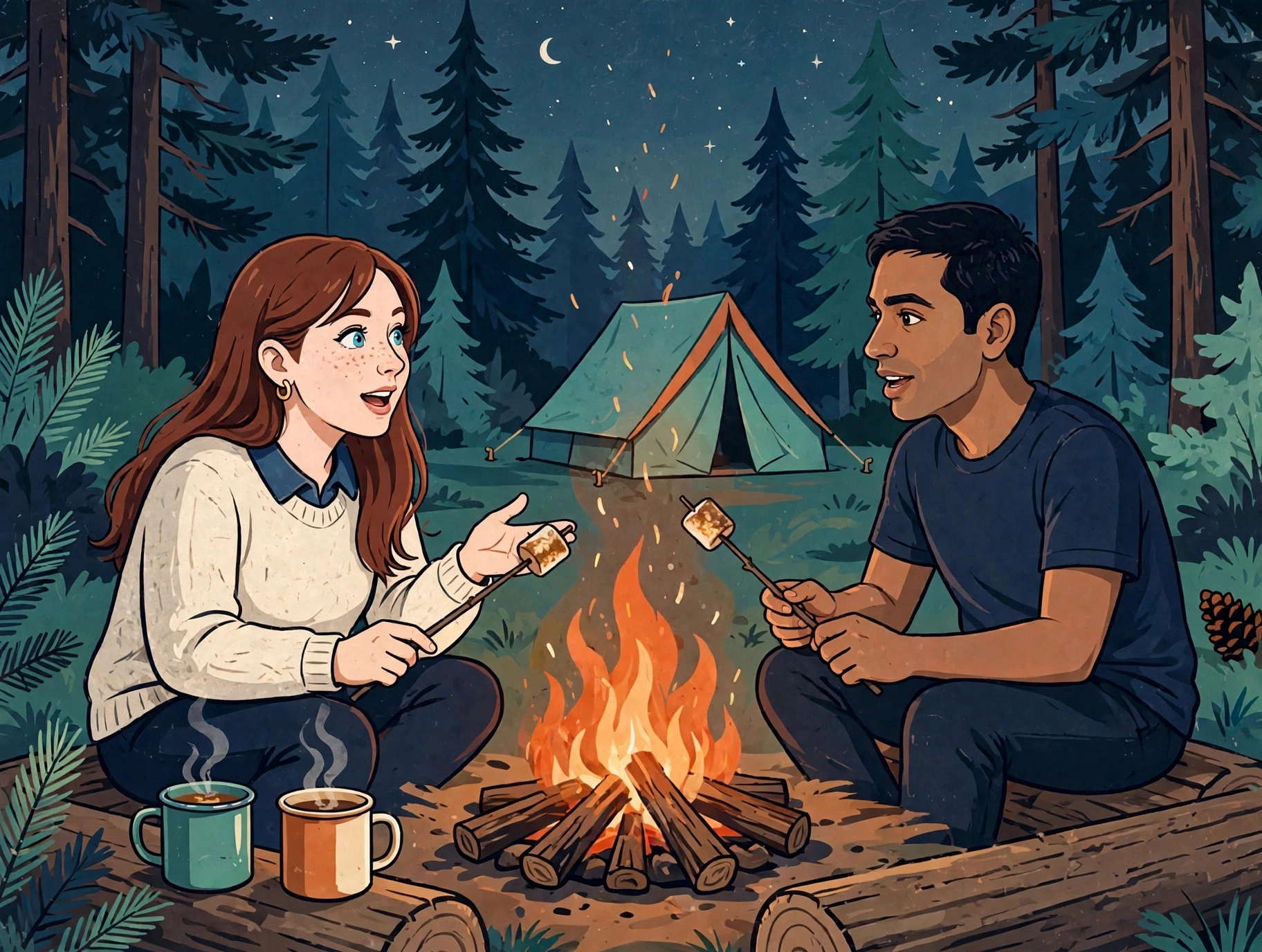
That night, sitting around the campfire roasting marshmallows, my wife Charrie and I couldn't stop talking about it. She kept coming back to the same question: why should finding a lost dog depend on cell towers at all? That question — simple, obvious in hindsight, and exactly the right one — became the seed of everything.
Charrie shaped the idea as much as I did. While I was already turning over the technical puzzle — what radio, what power budget, how small could the board be — she was asking the harder questions: who is this actually for, what would make someone trust it, what does it need to do on its worst day, not its best. The concept of a tracker that simply works, with no accounts and no subscriptions, owes as much to those campfire conversations as to any schematic.
That's when the idea took hold: what if the dog's location didn't depend on a cell tower at all? What if a small tracker on that collar could broadcast its position over radio — no towers, no coverage maps, no "can you hear me now" — straight to the owner's phone?
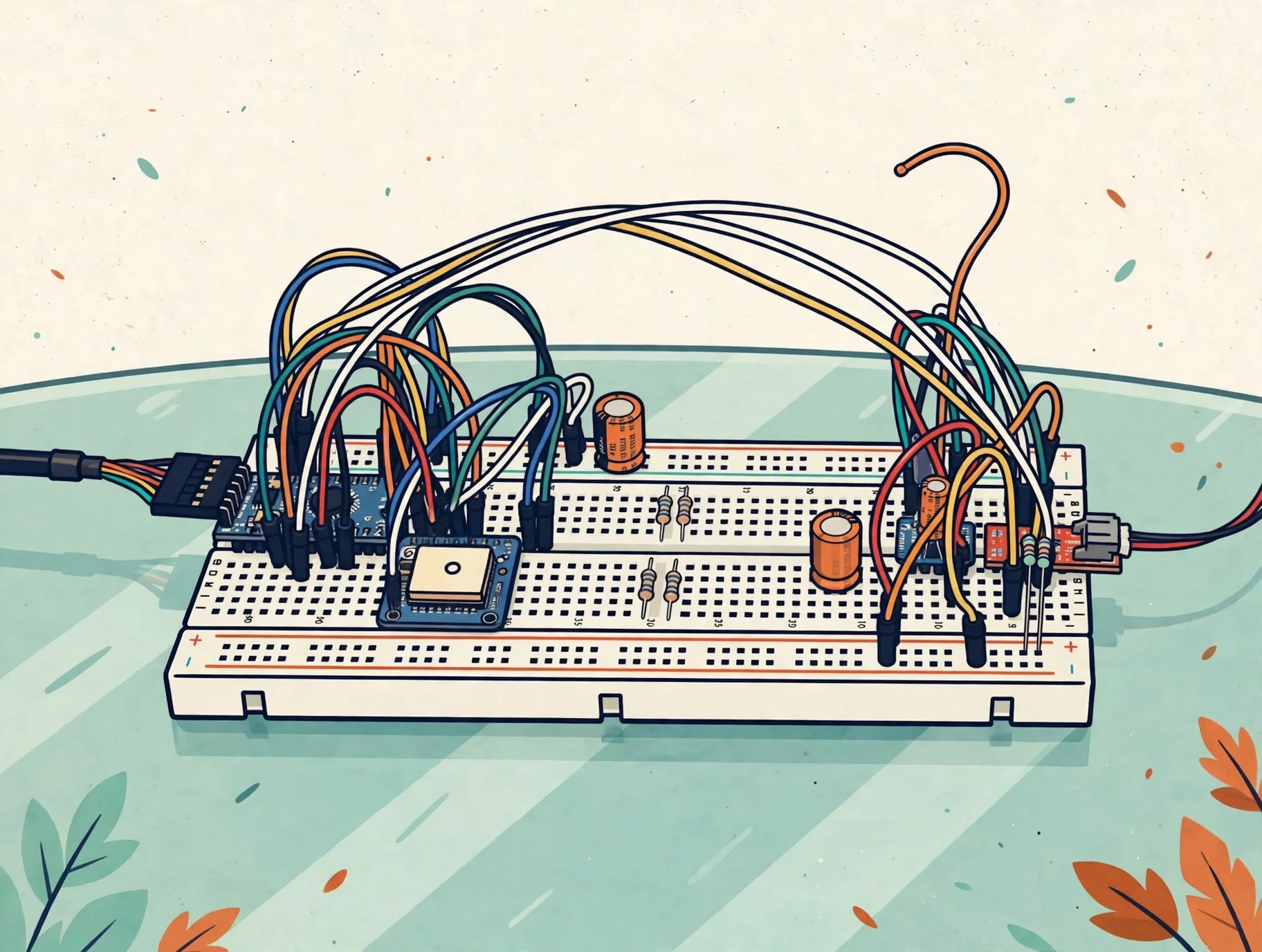
Back home, the idea became a tangle of jumper wires on a breadboard — a GPS module, a LoRa radio, and a microcontroller held together by optimism. It worked. That was enough to keep going.
By 2017 we had working PCB prototypes in hand, and the project picked up a small round of funding from the EPICentre in Windsor, Ontario. The tracker was real — it just wasn't finished yet.
Then life happened. In 2018 and 2020 our kids arrived, and the hours that had gone into the tracker went to them instead. The prototypes went into a drawer. For a while, that felt like the end of the story.
But the story wasn't over — it was just waiting for a reason to restart. Our kids are almost 8 and 6 now, and old enough to take off on their bikes. A few times they did exactly that, and we couldn't find them. Every parent knows that feeling — the minutes stretch, your chest tightens, and you think about everything you wish you'd had in that moment.
Those moments rekindled the unfinished project. The idea that started with a lost dog on a trail had come full circle — now it was about our own kids. I picked the prototypes back up, this time to finish them properly: a full production-ready product, not a lab experiment.
And I'm not the same engineer I was in 2017. The years since have given me deeper experience and knowledge from my professional work — RF design, low-power firmware, manufacturing — all of it going into making this a better, more robust product than anything we could have built back then. The unfinished project finally gets the finish it deserves.
I started building prototypes the next year. LoRa radio, GPS, a tiny board that sips power. The first versions were rough — wires everywhere, batteries that died too fast, firmware held together with hope. But every iteration brought the same principle into sharper focus: the places you most need a tracker are exactly the places your phone stops working.
That lost dog got home safe. But I never forgot how close it came to a different ending — or how much of that ordeal was just unnecessary. Ten years later, that day on the trail is still the reason Drover exists: so the next story like this one takes minutes, not hours.
And now the story is personal in a way I never expected back in 2016. Our kids — almost 8 and 6 — have had their own disappearing acts on their bikes, and every one of them brought that day on the trail rushing back. The tracker that started as a "what if" for someone else's dog is now the thing I want on my own kids. That's what finished it: not a business plan, but a parent who'd already lived the problem twice.
— Kaushik Ray, Founder, SiliconBrane Inc.
with Charrie Ray, Co-founder